
Airline Regulations Explained Key Changes Baggage Rules Refunds Passenger Rights and Holiday Package Updates
A flight booking looks simple until something changes. A bag is suddenly chargeable, a connection is missed, a strike closes an airport, or a package holiday supplier fails. Airline rules have grown from basic safety controls into a web of consumer protections, fare conditions, baggage limits and holiday safeguards.
For UK travellers, the key is knowing which rules apply before there is a problem. Airline regulations are not only about what happens in the air. They shape what airlines must tell you, what they can charge for, when they must refund you, and what support you can expect when disruption ruins the plan.
This guide explains how airline regulation has changed over time, how baggage policies differ across airlines, what refunds and compensation usually cover, and how holiday package rules have shifted in recent years. It is practical information, not legal advice, and airline policies can change, so always check the exact terms on your booking before you travel.

Airline regulation has moved from safety control to consumer protection
Early airline regulation focused mainly on safety, route permissions and fares. Governments controlled who could fly where, which airlines could operate, and how much competition was allowed. Over time, many markets became more open. Deregulation allowed more airlines to enter, more routes to appear, and more fare types to develop.
That shift helped create the low-cost airline model. Cheaper base fares became possible because airlines separated extras from the ticket price. Checked bags, seat selection, priority boarding, meals and changes could all become optional charges.
The result is more choice, but also more responsibility for travellers. A fare that looks cheap may work well for a short trip with one small bag. The same fare can become expensive if checked luggage, seat selection and changes are added later.
Modern regulation now covers several broad areas:
Safety and security
Aircraft maintenance, crew training, airport screening and operational rules.
Market access
Which airlines can operate certain routes and under what agreements.
Consumer information
Fare transparency, fees, taxes and booking conditions.
Passenger rights
Refunds, rerouting, care at the airport and compensation in certain delays or cancellations.
Insolvency and package protection
Rules that protect travellers if a holiday company or airline-linked package provider fails.
In the UK, travellers often encounter UK passenger rights rules that are closely related to the older EU framework. After Brexit, the UK kept many protections in domestic law. That means the rules still feel familiar to anyone who has used the EU261 system, although the UK now has its own version for many journeys.
The biggest practical change for travellers is that regulation has had to keep up with unbundled fares, online booking, airline failures, mass disruption and package holidays built from several separate services.
Baggage rules now vary sharply between airlines
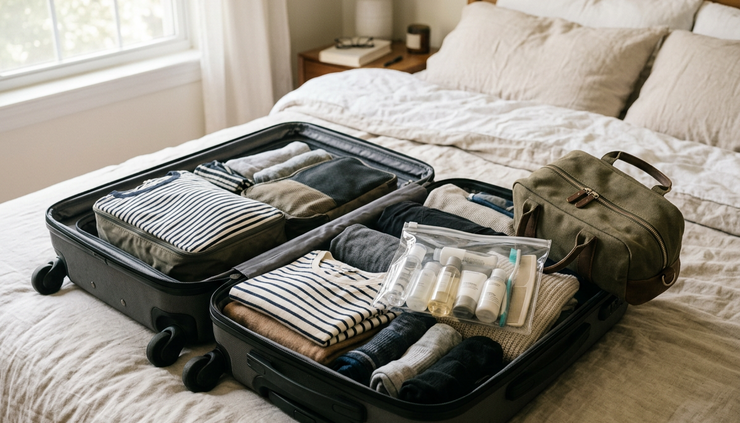
Baggage is where travellers often feel regulation and airline policy collide. Regulations set safety and security boundaries, such as banned items, liquids rules and dangerous goods restrictions. Airlines set commercial rules, such as size, weight, number of bags and fees.
That means two airlines can fly the same route but apply very different baggage allowances.
Airline type or example | Cabin baggage approach | Checked baggage approach | Practical tip |
British Airways and similar full-service carriers | Cabin bag and smaller personal item may be included on many fares | Often included on long-haul or higher fares, but not always on basic fares | Check whether your fare is basic or standard before assuming a checked bag is included |
easyJet and similar low-cost airlines | A small under-seat bag is often included, larger cabin bags may cost extra | Usually sold separately by weight band or fare bundle | Add bags during booking rather than at the airport, where fees can be higher |
Ryanair and similar ultra-low-cost airlines | Small personal item usually included, priority or larger cabin bag often costs more | Checked bags are usually separate add-ons | Measure your bag carefully because gate checks can be strict |
Jet2 and leisure-focused airlines | Cabin allowance may be clearer and holiday-friendly, but still limited | Checked bags often added as part of a fare or package option | If booking a package, check whether baggage is included in the holiday price |
Long-haul network airlines such as Emirates or Qatar Airways | Cabin baggage rules may depend on cabin class and route | Allowances can be based on weight or number of pieces | Do not assume the same allowance applies on every route or ticket type |
Wizz Air and similar low-cost airlines | Basic fares usually include only a small bag | Checked bags and larger cabin bags cost extra | Watch size limits as well as weight limits |
The main differences to check are:
Size
Cabin bag dimensions matter as much as weight. A bag that fits one airline may fail another airline’s sizer.
Weight
Some airlines focus heavily on cabin bag weight. Others pay closer attention to dimensions.
Number of items
A “cabin bag” and a “personal item” are not always the same thing. Some fares allow only one small item under the seat.
Fare type
Basic, saver or economy light fares often strip out checked baggage.
Route and aircraft
Smaller aircraft may have tighter cabin storage. Even permitted cabin bags can be checked at the gate if space runs out.
Special items
Pushchairs, sports equipment, musical instruments and medical equipment usually have separate rules.
A good rule is to decide what you need before comparing prices. Compare the total trip cost, not just the headline fare. A £39 flight can still be good value, but not if it becomes £120 after adding a normal cabin bag and one checked suitcase.
Refunds and compensation do not mean the same thing
Many travellers use “refund” and “compensation” as if they are the same. They are different.
A refund gives back money paid for a service you did not receive, or no longer choose to take after a qualifying cancellation or major disruption.
Compensation is an extra payment for inconvenience and lost time when the airline is responsible under passenger rights rules.
You may be entitled to one, both, or neither, depending on what happened.
When a flight is cancelled
If an airline cancels a flight covered by UK or EU-style passenger rights rules, it must usually offer a choice between:
A refund
Re-routing at the earliest opportunity
Re-routing at a later date, if seats are available and that works for you
If you choose a refund, the airline normally no longer has to get you to the destination. If you choose re-routing, the airline may still need to provide care while you wait.
Care can include:
Food and drink in reasonable relation to the waiting time
Hotel accommodation if an overnight stay becomes necessary
Transport between the airport and hotel
Communication support, such as calls or messages
You may also qualify for compensation if the cancellation is close to departure and the airline is responsible. Compensation is less likely if the airline gave enough notice or if the disruption was caused by extraordinary circumstances outside the airline’s control.
Extraordinary circumstances can include severe weather, air traffic control restrictions, security risks or some strikes outside the airline. Technical faults are more complex. Some technical issues are treated as part of normal airline operations, while unusual external defects may be different.
When a flight is delayed
A delay can trigger different rights at different stages.
If the delay is long enough, the airline may need to provide care at the airport. If the delay becomes very long, you may have the right to abandon the trip and request a refund for the unused part of the ticket. If you arrive at your final destination at least three hours late and the airline is responsible, compensation may be due on many covered flights.
Under UK-style rules, compensation is linked to distance and length of delay. It can be up to set amounts for short, medium and long flights. The exact amount depends on the route, arrival delay and cause of disruption.
Keep these two points in mind:
Arrival time usually matters more than departure time.
A flight that leaves late but lands less than three hours late may not qualify for delay compensation.
The cause matters.
A long delay caused by airline scheduling or operational problems may be treated differently from one caused by severe weather.
When you miss a connection
Connection rights depend on whether the flights are on one booking.
If both flights are on the same ticket and the first delay causes a missed connection, the airline or operating carrier may have duties to reroute you and provide care. If you booked separate tickets yourself, the second airline may treat you as a no-show, even if the first delay was not your fault.
For important trips, single-ticket connections are safer. Separate tickets can be cheaper, but they carry more risk.

Passenger rights are strongest when you document the disruption
When disruption happens, the best step is to stay calm and gather evidence. Airlines deal with large volumes of claims after major disruption. Clear records make your claim easier to assess.
Before leaving the airport, try to collect:
Booking reference and ticket number
Boarding pass or digital boarding record
Screenshots of delay or cancellation messages
Photos of departure boards if they show the disruption
Written reason for the delay or cancellation, if staff can provide one
Receipts for food, transport or hotel costs
Notes of times, including when doors opened at arrival
Ask the airline what it is offering before paying for alternatives yourself. If care is not provided and you must buy food or book a hotel, keep spending reasonable. Luxury hotels, alcohol and expensive meals may not be reimbursed.
A practical claim process usually looks like this:
Contact the airline through its official claims page.
Include flight number, date, booking reference and passenger names.
Explain the disruption clearly and briefly.
State whether you are asking for a refund, expenses, compensation, or a mix.
Attach receipts and evidence.
Keep copies of everything.
If the airline rejects the claim and you disagree, UK travellers can look at the airline’s complaints process and whether it belongs to an approved alternative dispute resolution scheme. The UK Civil Aviation Authority also provides guidance, although it does not act as a personal claims solicitor.
Travel insurance can help too, but it is separate from airline rights. Insurance may cover missed departures, baggage loss, medical issues or disruption that airline compensation does not cover. Read the policy wording, especially exclusions for strikes, weather and pre-existing known disruption.
Holiday package rules have become more important since travel became more complex
Package holidays used to be easy to spot. A traveller booked flights, hotel and transfers from one brochure at one price. Modern travel is less tidy. A holiday might be built online from flights, accommodation, car hire, excursions and transfers, sometimes through linked booking pages.
Regulation had to catch up.
In the UK, package travel protection is mainly shaped by the Package Travel and Linked Travel Arrangements Regulations 2018. These rules widened protection beyond traditional brochure holidays. A trip may count as a package if it combines at least two different travel services for the same holiday, such as flights and accommodation, and is sold in a way that meets the legal definition.
Protection can matter when:
The organiser changes key parts of the holiday before departure
The holiday cannot be provided as promised
Travel services fail during the trip
The organiser becomes insolvent
Extraordinary events affect the destination
A regulated package can give travellers stronger rights than separate bookings. The organiser may be responsible for fixing problems with parts of the package, even if another supplier provides the actual service. That might include a hotel issue, transfer failure or flight problem included in the package.
Linked travel arrangements are different. They may offer some insolvency protection, but they usually do not give the same level of responsibility as a full package. This distinction matters because two bookings can look similar on screen but carry different rights.
What has changed recently in holiday protection
Recent years have pushed holiday rules under the spotlight. The collapse of travel companies, the pandemic, airport disruption and fast-changing entry rules all exposed weaknesses in how refunds and responsibilities were handled.
The main direction of change has been towards:
Clearer information before booking
Better explanation of who is responsible for the trip
Stronger focus on refund speed when a package is cancelled
More scrutiny of insolvency protection, including ATOL-covered flight packages
Greater awareness of linked travel arrangements and their limits
ATOL protection remains central for many UK flight-inclusive packages. If an ATOL-protected travel company fails, the scheme may protect money paid or help travellers return home, depending on the situation. Travellers should receive an ATOL Certificate when covered. Keep it with your booking documents.
The practical lesson is simple. If you want the strongest protection, do not judge by price alone. Check whether the trip is a package, whether ATOL applies, who the organiser is, and what the cancellation terms say.
How to protect yourself before and during travel
Regulations help, but they work best when travellers make careful choices at booking stage.
Use this checklist before you pay:
Check the operating airline
Codeshares can confuse claims. The airline that operates the flight may be the one responsible for disruption duties.
Compare the full fare
Include cabin bags, checked bags, seats, payment fees and changes.
Book connections on one ticket where possible
It gives better protection if the first flight causes a missed connection.
Read cancellation terms
Flexible fares cost more, but they can save money if plans may change.
Save every document
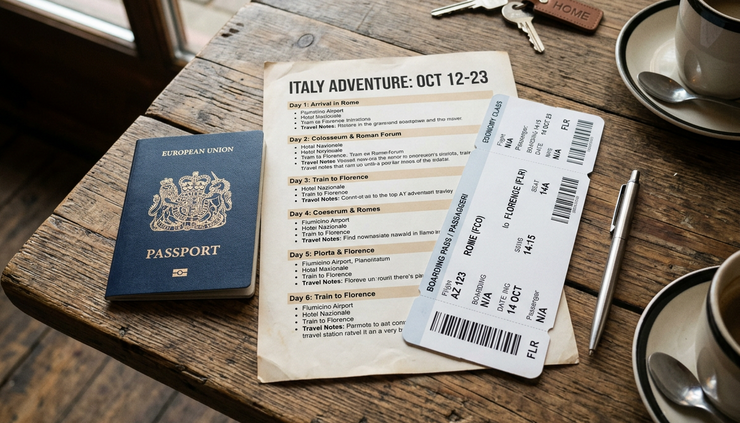
Keep confirmations, receipts, boarding passes and disruption messages.
Know whether your holiday is a package
Look for package wording, organiser details and ATOL protection where relevant.
Buy travel insurance early
Insurance bought soon after booking may cover more pre-departure problems than a policy bought just before travel.
During disruption, avoid making rushed decisions. If the airline cancels your flight, ask whether you are being offered a refund or rerouting. If staff are overwhelmed, use the airline app and website too. If you arrange your own hotel or transport, stay within reasonable costs and keep receipts.
For baggage, take photos of checked luggage before you travel. If a bag is delayed, damaged or lost, report it at the airport before leaving and get a property irregularity report or equivalent reference. Claims for baggage are often subject to strict time limits, so act quickly.
The main takeaway for travellers
Airline rules have evolved because air travel has changed. Fares are more flexible, but also more fragmented. Holidays are easier to build online, but the legal protection depends on how they are sold. Passenger rights are stronger than many people realise, but they still depend on route, timing, cause and booking type.
The best protection is a mix of knowledge and preparation. Check baggage rules before choosing a fare. Understand the difference between a refund and compensation. Keep records when disruption happens. For holidays, confirm whether the booking is a protected package or just separate services placed side by side.
A few minutes spent reading the fare and holiday terms can save hours of stress later. When plans go wrong, clear documents and calm persistence are often what turn passenger rights from theory into money back, rerouting, care, or proper compensation.


Comments